
Sleeper Sofa Buying Guide: How to Choose One You'll Actually Sleep On
A sleeper sofa asks one piece of furniture to do two jobs, and most of the disappointment people feel with theirs traces back to buying for the wrong one. If you sit on it every evening and someone sleeps on it four nights a year, you are buying a sofa. If it is the only bed in a studio apartment, you are buying a bed that happens to fold. Deciding which of those you actually need is the first and most important step, because nearly every other choice follows from it.
Start with how often it will be slept on
Be honest about the frequency. It changes where your money should go.
- A few nights a year. Holiday guests, the occasional friend passing through. Put your budget into the sofa: the frame, the seat cushions, the fabric. A standard innerspring sleeper mattress is fine for this.
- A night or two a month. Regular enough that guests will notice the mattress. This is where a foam or gel upgrade earns its cost.
- Weekly or nightly. You are buying a sleep system, not a sofa with a surprise inside. Look at air-over-coil mattresses, mechanisms rated for daily use, or step back and consider whether a daybed with a trundle serves you better.
The mattress is most of the decision
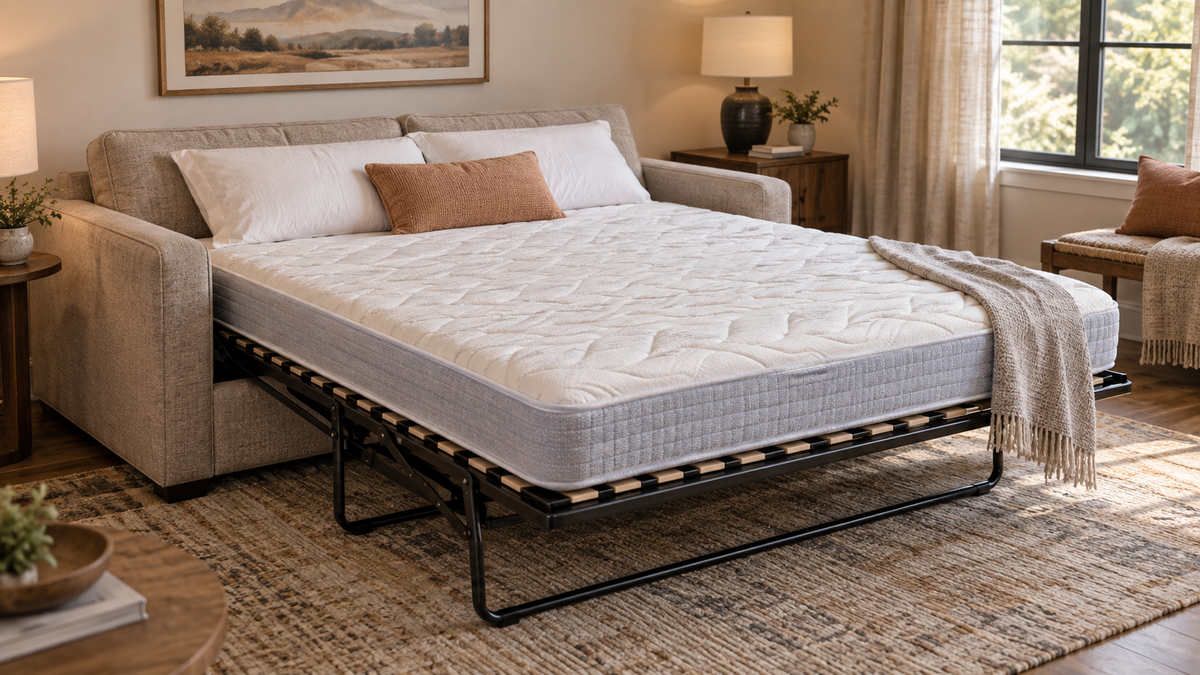
Everything else on a sleeper sofa can be excellent and the piece will still fail if the mattress is bad. Manufacturers usually offer two or three grades on the same frame, so this is the upgrade to spend on first.
- Innerspring. The standard inclusion, typically around four inches thick. It works, it is durable, and it is the one where people complain about feeling the support bar through the middle of the bed.
- Memory foam. The most common upgrade. No coils and no bar sensation, and it folds into the cavity without fighting you. It sleeps warmer than innerspring, which matters more in a sunroom than a basement.
- Gel-infused memory foam. Same feel as memory foam with better heat dissipation. Worth the difference if the room runs warm or your guests do.
- Air-over-coil. An inflatable layer over a coil base, adjusted with a small pump. This is the closest a sleeper sofa gets to a real bed, and the right answer when the sofa is someone's primary mattress. It costs more and it adds a pump you have to keep track of.
One thing to check regardless of grade: what the mattress rests on. A solid or closely spaced deck under the mattress makes a bigger difference to comfort than an extra half inch of foam does.
Know the mechanisms
- Traditional pull-out. The mattress folds in three and lives inside the seat cavity. The most common design, available from twin through queen, and the one with the widest selection of styles.
- Pop-up or trundle. The seat slides forward and legs drop to meet the floor, giving you a sleeping surface level with the seat. Because it extends forward instead of unfolding upward, it suits rooms where you cannot swing a full pull-out open.
- Jackknife or click-clack. The back folds flat and the seat itself becomes the bed. No separate mattress, so nothing to store, but also no separate mattress, so the comfort is whatever the seat cushions give you. Good for small spaces and tight budgets.
- Futon. The simplest and cheapest version of the idea. Fine for a dorm or a home office, thin on comfort for anyone over about one night.
- Sectional sleepers. Usually a queen mechanism in one seat of the sectional, often paired with a storage chaise for bedding. Check which side the mechanism sits on before you commit to a left or right chaise.
Sizes, and the thing nobody mentions about length
Sleeper mattresses are named for their width but they are usually shorter than the standard mattress of the same name. A queen sleeper mattress is commonly about 72 inches long, where a standard queen is 80. If your regular guest is over six feet tall, that is the specification to check before anything else.
As a rough guide to the sofa itself: twin sleepers tend to land in the five-foot range, full sleepers around six feet, and queen sleepers around seven feet of overall width. Always work from the actual specifications on the product page rather than these ranges.
Measure the open footprint, then measure the way in
Two separate measuring jobs, and people usually only do the first one.
- Open depth. A queen sleeper typically needs somewhere around seven and a half feet of clearance from the wall when it is open, and you want room to walk past that without climbing over the bed. Tape the footprint out on the floor before you buy.
- The path in. Doorways, stairwell turns, elevator depth, and low ceilings at the top of a stair. A sleeper cannot be pivoted the way a regular sofa can, because the mechanism means the frame will not flex and the piece will not stand comfortably on end.
- Weight. The steel mechanism and mattress add real mass over the same sofa without them, and many sleepers land well over two hundred pounds. Plan on two people minimum, and be realistic about the stairs.
Frame, suspension, and cushions
A sleeper takes stress a normal sofa never sees, because the whole frame gets loaded and unloaded every time the bed comes out. Look for a kiln-dried hardwood frame, a steel mechanism with welded joints rather than bolted ones, and high-resiliency seat foam. If you can see the piece in person, open and close it two or three times. A mechanism that binds, scrapes, or requires a knack in the showroom will not improve at home.
Upholstery
Sleepers usually live in rooms that work hard: family rooms, offices, basements, guest rooms that double as everything else. Performance fabrics are worth it here, and so is ordering swatches before you decide, because screens are unreliable on color. Leather works on a sleeper, but pay attention to how the back and seat fold, since the leather creases where the deck moves. Removable, washable covers are a genuine advantage on a piece that gets slept on.
Delivery is part of the purchase
Because of the weight, most sleeper sofas ship by freight rather than parcel. Know before you order whether you are buying curbside delivery or room-of-choice white glove service, since the difference at the door is substantial. When the truck arrives, inspect the piece before you sign, and write any damage on the delivery receipt itself. A signed clean receipt makes a later claim much harder.
A short checklist before you order
- How many nights a year will someone sleep on it, honestly?
- Which mattress grade is included, and what does the upgrade cost?
- How long is the mattress, not just how wide?
- Does the open bed fit the room with walking space left over?
- Will it clear every doorway, stair turn, and ceiling on the way in?
- Have you seen the fabric in person?
- What delivery level are you buying, and who carries it inside?
Get those seven right and the piece will do both of its jobs for years. Get the first one wrong and no amount of frame quality will fix it.